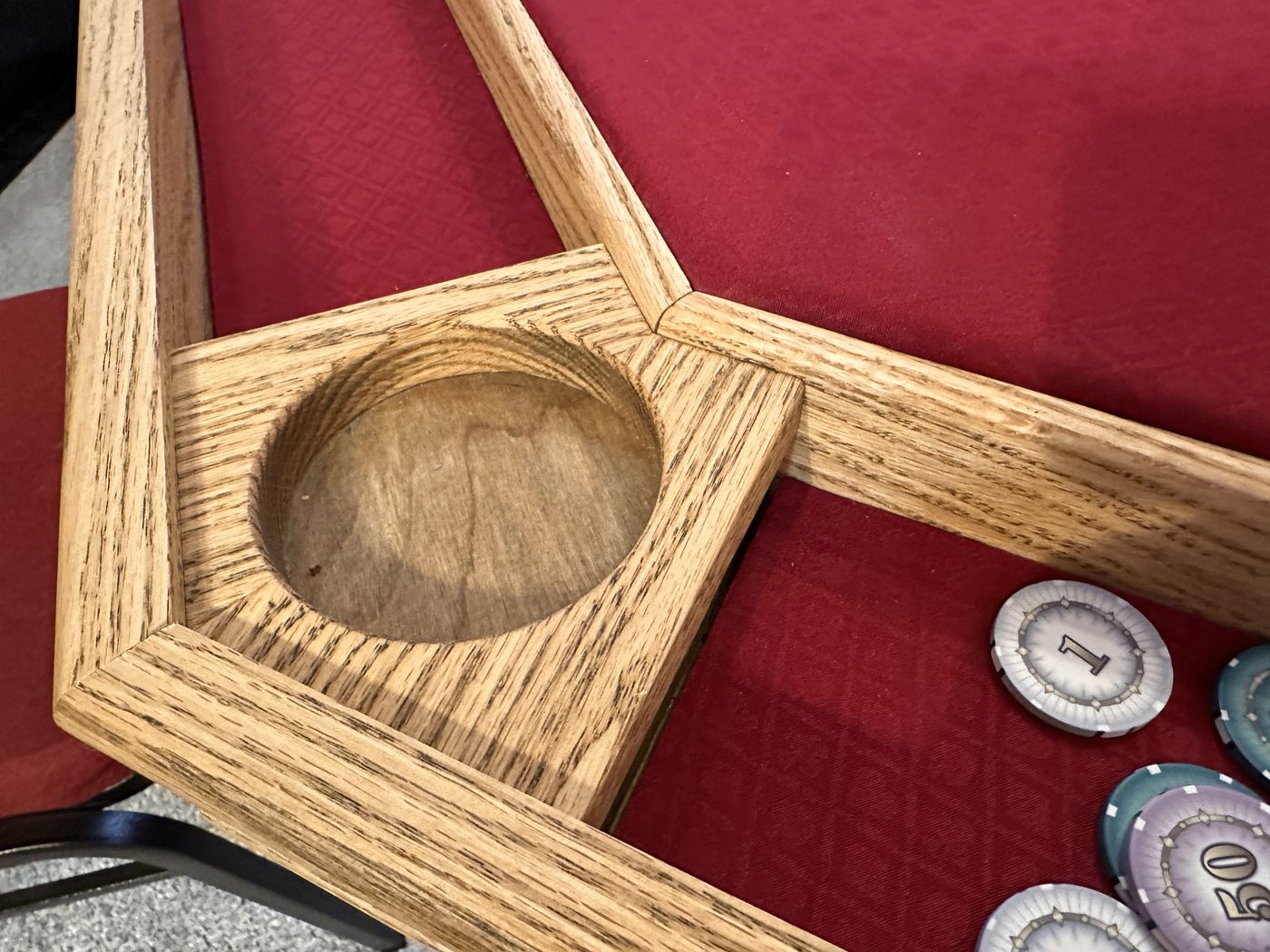
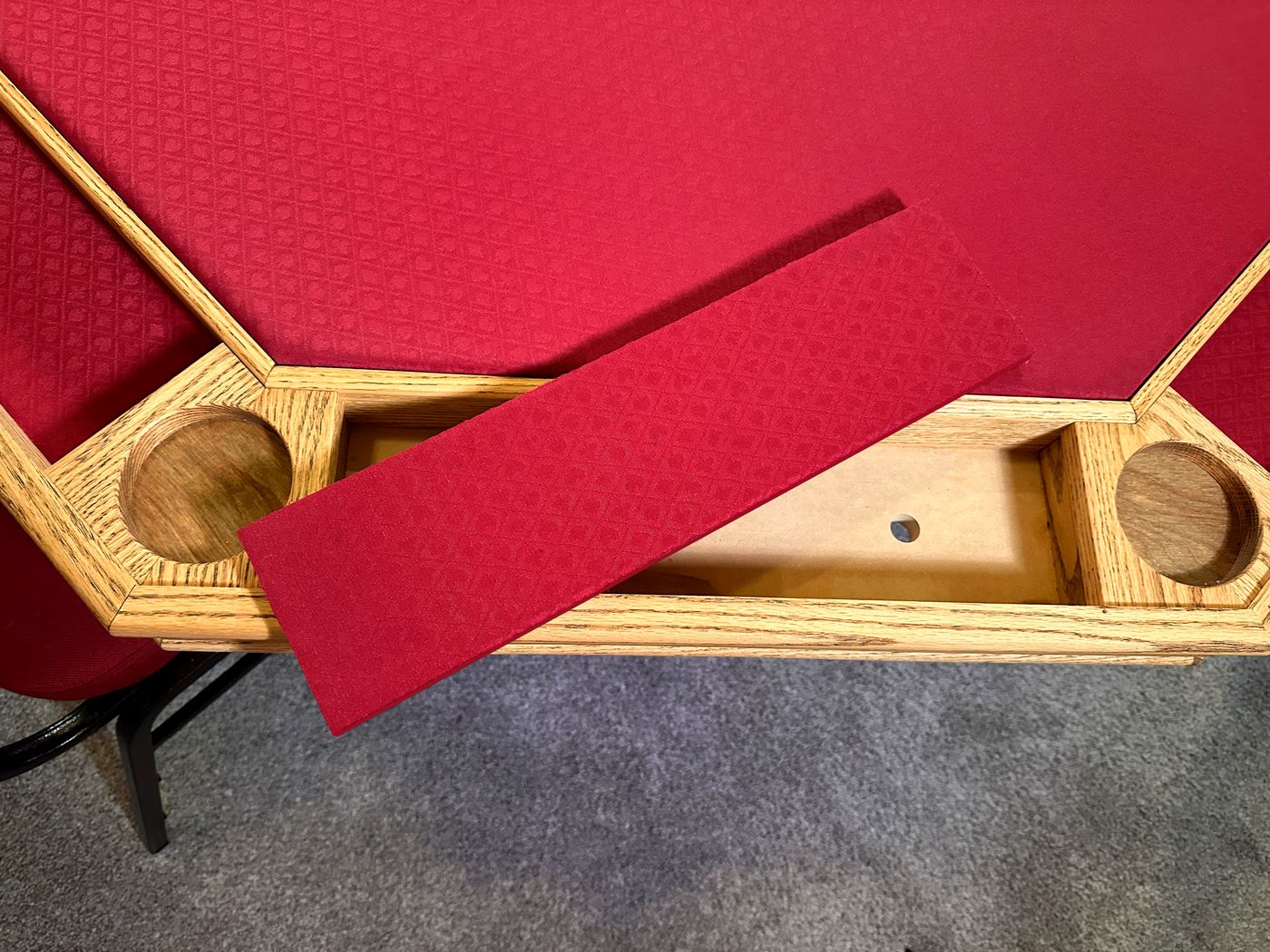
Everything below is for anyone who wants to know where the name, the motto, and the circle come from. None of it is required reading to own an Azoth — but it is why an Azoth is not just a table.
The Great Work
Alchemy is remembered for its seeking of the one thing it never accomplished: turning lead into gold. Alchemists called this the Magnum Opus — the Great Work. The long labor of taking base material and bringing it, stage by stage, to something perfect and incorruptible.
The Work had an object: if done correctly, it produced the Philosophers' Stone — said to turn base metal into gold and yield the Elixir of Life.
Azoth is arranged the same way, and like everything in alchemy, it reads on multiple levels.
From our shop: the Work is the building, the Stone is the table it produces, and the Elixir is the joy that table brings into your house.
From your chair: the Work is the commission, the Stone is what rises in the center of your table, and the Elixir — we'll come back to that.
Both are true at once, like the oldest idea in the craft. “As above, so below.”
A tree becomes lumber, lumber becomes an octagon, an octagon becomes the object at the center of your best nights, and eventually it becomes an heirloom your grandchildren will covet. That is a Great Work at furniture scale.
Why "Azoth"?
Back in the 1500s there was a Benedictine monk who may or may not have actually existed. His name was Basil Valentine. (Cool name, right?) Historians ascribe his real identity to a gent by the name of Johann Thölde. Whoever he was, he knew a lot about alchemy, the precursor to modern chemistry.
Basil wrote a book, The Azoth of the Philosophers. Alchemists believed that hidden inside ordinary matter is something extraordinary, waiting to be revealed. They called this spirit of transformation — the living agent that takes what is inert and sets it in motion — Azoth.
The word itself is a cipher. A is the first letter of the Latin, Greek, and Hebrew alphabets alike; Z is the last of the Latin, O is omega, last of the Greek, Th is tav, last of the Hebrew. The name literally encodes "the beginning and the end" across three ancient alphabets — a fitting name for an heirloom that will bear witness to untold generations of conversation, revelry, and camaraderie.
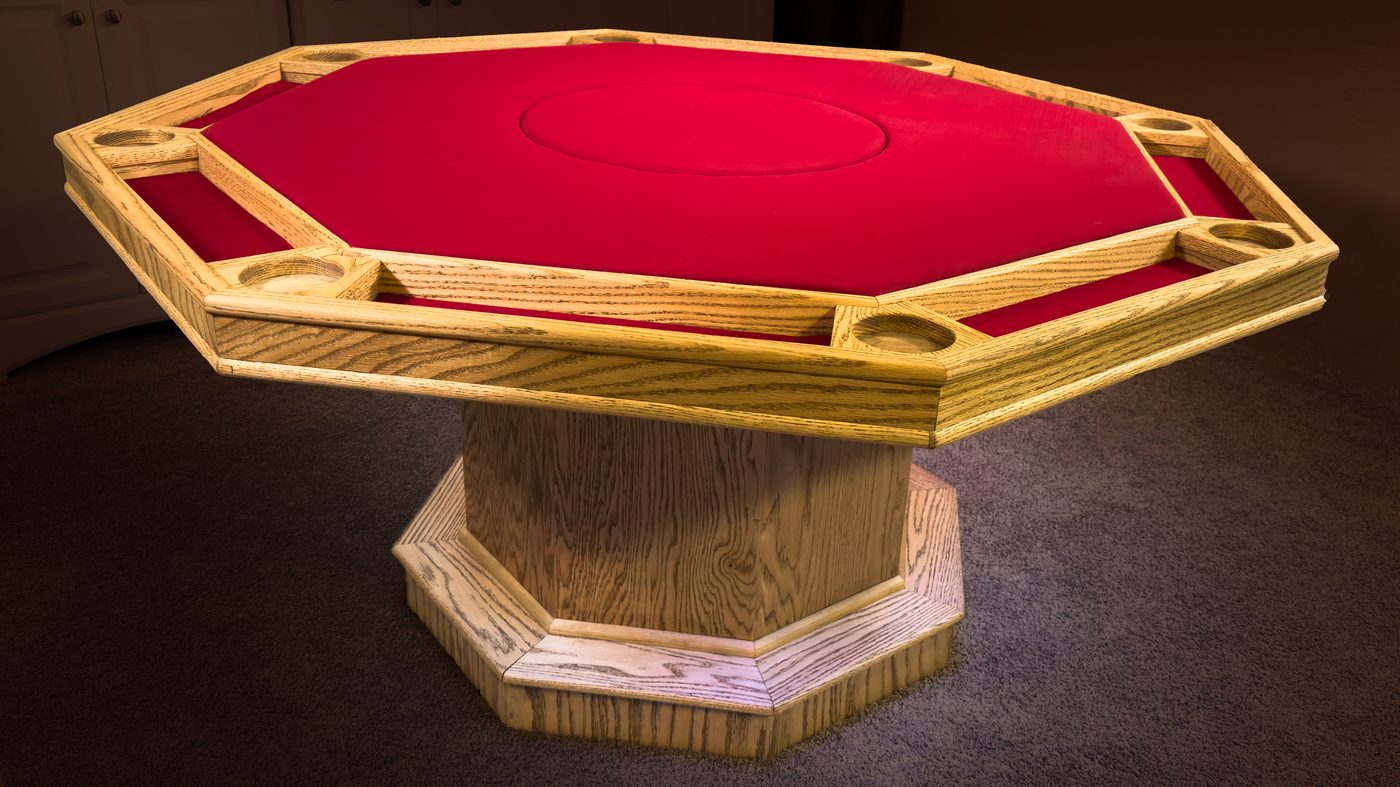
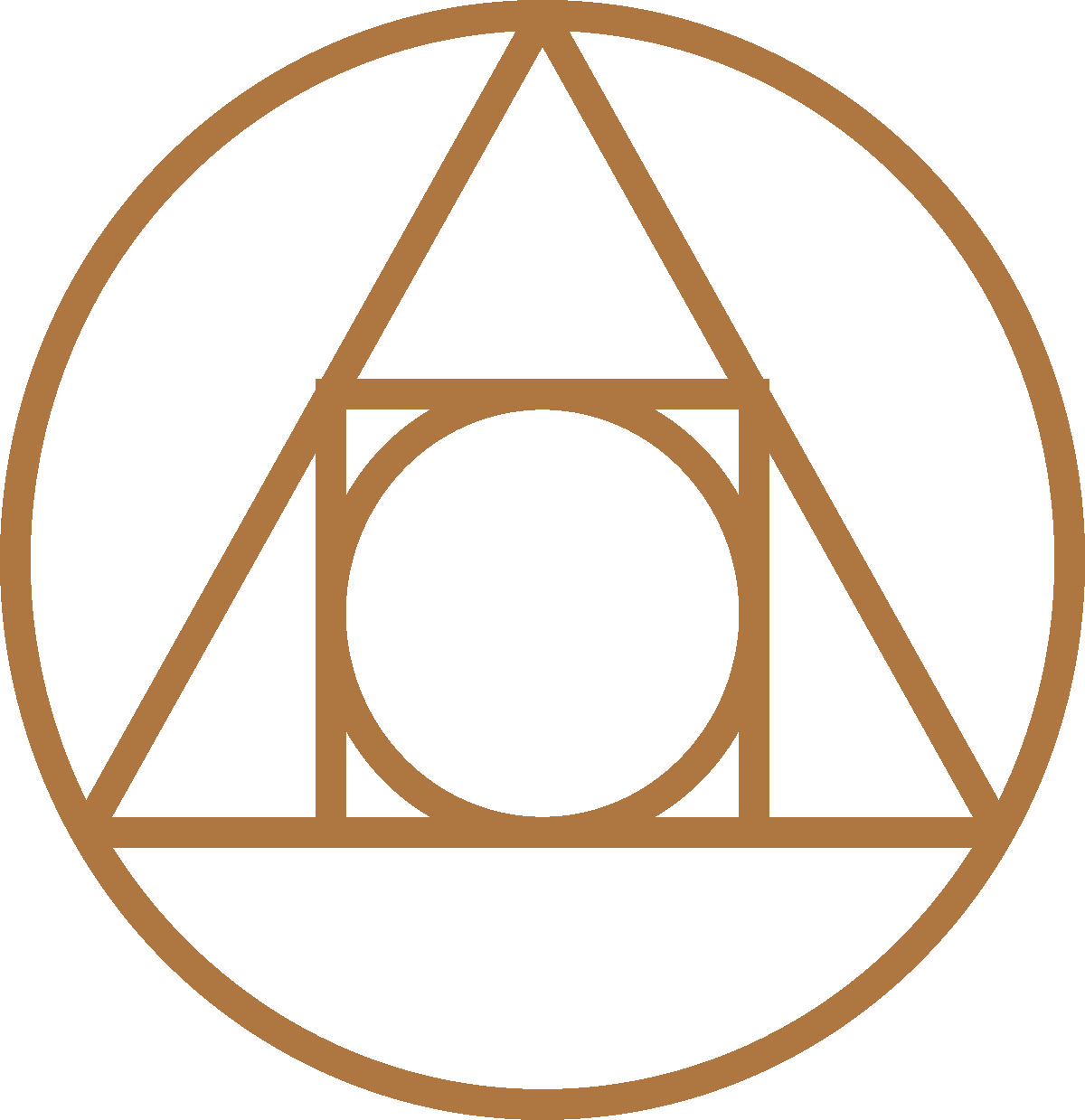
The shape is not arbitrary: in the old geometry, the octagon is what a square becomes on its way to a circle — the emblem of work in progress. Your table is literally an alchemists' diagram, built in oak.
The Twelve Keys. Basil Valentine published twelve keys said to unlock the Great Work — twelve turns that take base matter all the way to gold. Which is why the first twelve Azoth commissions each carry one of these keys, recorded in their papers.
The motto the table performs
Around the rim of the old Azoth emblem runs a seven-letter acrostic — V·I·T·R·I·O·L — for a Latin sentence: Visita Interiora Terrae Rectificando Invenies Occultam Lapidem.
Visit the interior of the earth, and by rectifying you will find the hidden stone.
The pun underneath it is the oldest in the craft. Vitriol — oil of vitriol, or sulfuric acid — was alchemy's great agent of transformation. It is the substance that dissolves matter down to its essence, that literally visits the interior and rectifies it. They named the motto after the substance that performs the motto.
That sentence describes this table.
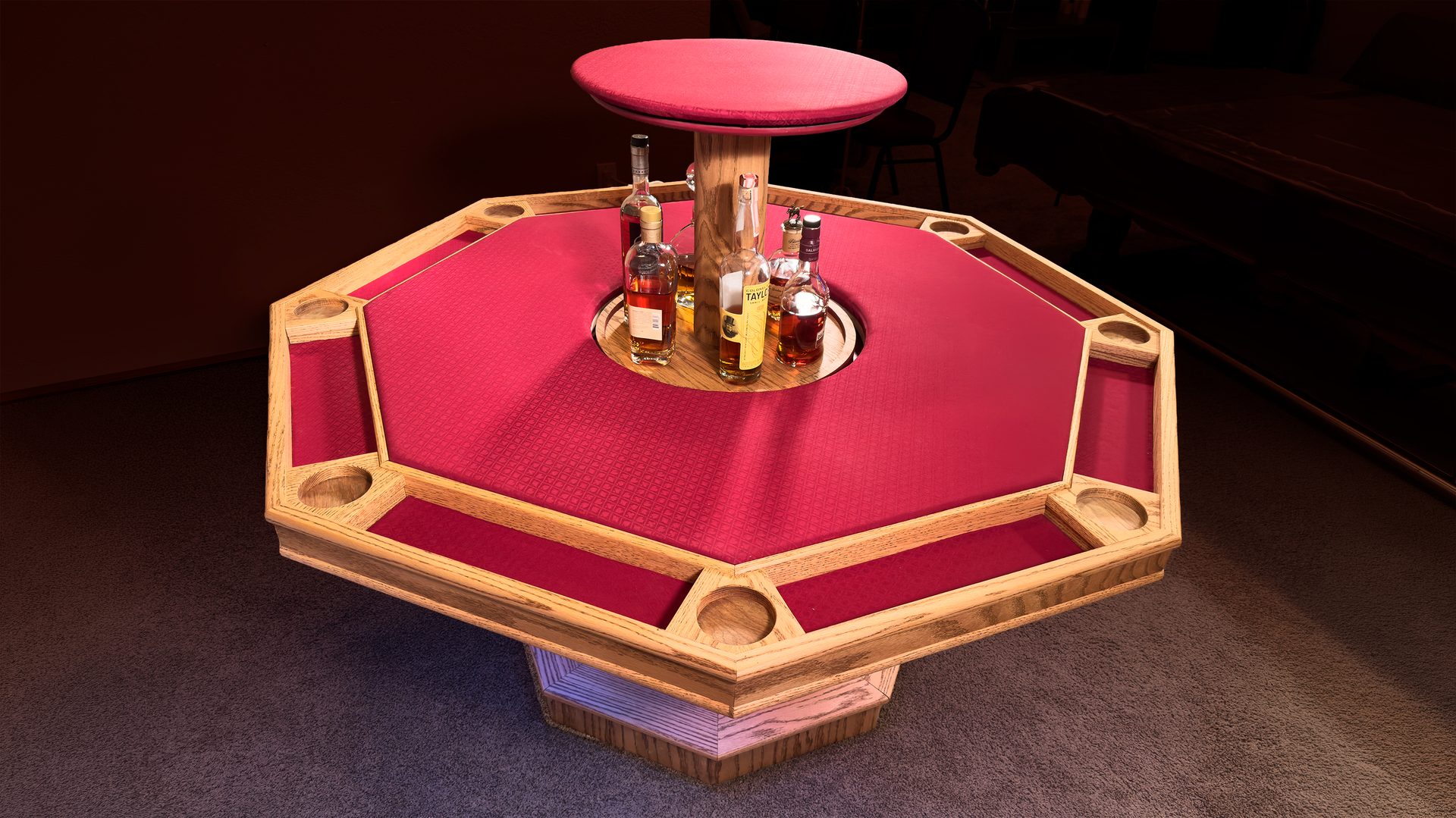
Visit the interior — press the button and the surface opens.
By rectifying — the refining craft of the build.
You will find the hidden stone — whatever rises into the light.
The table performs its own motto every time the bar comes up, which is why the words are engraved inside the cavity, where only the rising reveals them.
Sublime sublimation
In the laboratory, sublimation is the operation where a heated solid never bothers to melt. It goes straight to vapor, rises, and re-forms above — purified. The alchemists prized it as the emblem of matter learning to ascend.
The Azoth lift is mechanical sublimation. The fixed becomes volatile and rises into the light. When the night ends it descends and is fixed again, and the surface returns to stillness.
Of course, in the case of an Azoth table, what rises from below is also sublime.
The Philosophers' Stone was always plural
The Latin for the Stone was lapis philosophorum: a plural possessive. Correctly translated, it was always the Philosophers' Stone — the stone of the philosophers, more than one of them. It never belonged to a single seeker, because the Work was never meant to be done alone.
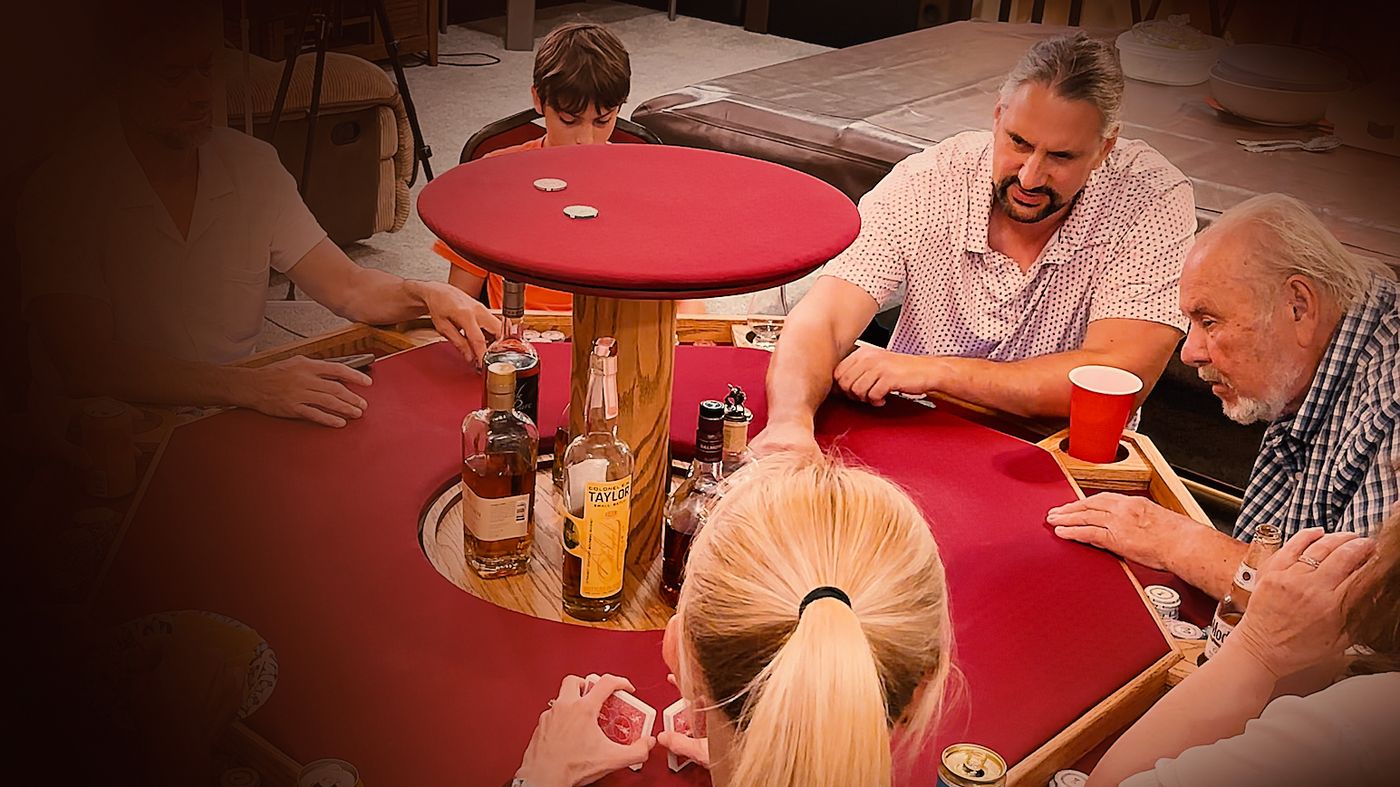
First-time guests think the hidden stone is the bar. Owners eventually find the real meaning: a stone of many philosophers is a table of many players. The octagon seats eight. The copper coasters can even name them, seat by seat. At every Azoth there is more than one philosopher — that is the point of the plural, and the point of the table.
The only elixir anyone ever brewed
The Great Work promised two things: the Stone, and the Elixir of Life — the draught that defeats time.
While no drink has ever given us eternal life, the time shared around a drink can create memories that last a lifetime. The standing game that survives three decades, the friends who keep showing up, the family that keeps the date circled on the calendar. These rituals are the only elixir anyone has ever actually brewed, and they need a place to gather them.
What rises from an Azoth is the elixir of your choice. What it raises is the spirits of the people circled around it.
The cards were already alchemical
One last thing, which we did not invent and could not improve on.
Playing-card suits descend from the tarot's four elemental suits. Cups became hearts — water. Coins became diamonds — earth. Wands became clubs — fire. Swords became spades — air. These four elements anchor the corners of every alchemical emblem ever drawn.
Which means every hand dealt on this table is already a fistful of elements.
Every Azoth is connected to every other
When you commission an Azoth you receive a place in a circle. Alone, each table is a fragment of the Work. Together, every Azoth ever made completes a single circle that is never finished — because every new owner extends it.
- The lineage. Every Azoth is numbered in the order it leaves the shop, and that number is stamped into a brass plaque set inside the table. Your dossier records where yours sits in the sequence, and which tables were finished immediately before it. Your place in that sequence is fixed the day your table leaves the shop.
- The Year's Rising. Once a year, on a fixed date, every owner on Earth raises their bar and pours at the same moment. You may never meet another owner. You will feel them anyway.
Every table we build makes the next one mean more — and makes yours, with age, worth more.